Two Approaches to Assisted Living
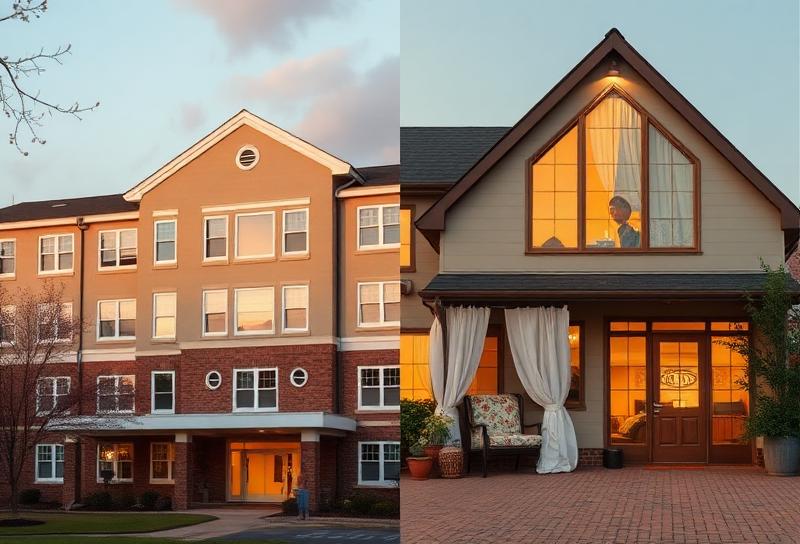
When families begin exploring assisted living options, they often discover that there are two distinct models: large-scale assisted living communities and smaller residential assisted living (RAL) homes. Both provide personal care support, but the experience, environment, and culture of care can differ significantly.
Understanding these differences helps families make a choice that aligns with their loved one's needs, preferences, and personality — not just their care requirements.
Traditional Assisted Living Communities
Traditional assisted living communities are typically larger facilities housing 50 to 200+ residents. They often feature apartment-style living with shared amenities such as dining rooms, activity spaces, salons, and fitness areas.
These communities offer structured activities, social programming, and various levels of care. They may appeal to residents who enjoy a more active, social environment with access to a wide range of on-site amenities.
According to the National Center for Assisted Living, there are approximately 28,900 assisted living communities in the United States serving about one million residents [1].
Residential Assisted Living (RAL) Homes
Residential assisted living homes, sometimes called care homes or group homes, typically serve 4 to 10 residents in a converted private home. These settings offer a more intimate, homelike environment with higher staff-to-resident ratios.
RAL homes may be particularly well-suited for individuals who feel overwhelmed in larger settings, those living with dementia, or residents who thrive with consistent, familiar caregivers and a quieter daily rhythm.
In Arizona, residential assisted living homes are regulated by the Arizona Department of Health Services and must meet specific licensing requirements for care, safety, and staffing [2].
Key Differences at a Glance
Size: Traditional communities house 50-200+ residents; RAL homes typically serve 4-10. Staffing: RAL homes often have higher caregiver-to-resident ratios. Environment: Communities offer more amenities and social programming; RAL homes offer a quieter, more personalized setting.
Cost: Pricing varies widely in both models. RAL homes may have higher base rates but often include more services. Traditional communities may have lower base rates with additional charges for higher care levels.
Neither model is universally better — the right choice depends on your loved one's personality, care needs, social preferences, and what environment helps them feel most at home.
Key Takeaways
- ✦Traditional communities offer more amenities and social programming in a larger setting.
- ✦RAL homes provide intimate, homelike care with higher staff ratios.
- ✦The right choice depends on your loved one's personality and care needs, not just cost.
- ✦Touring both types helps you feel the difference firsthand.
- ✦A senior living advisor can help you identify which model fits your family best.
Related Articles
Sources
- National Center for Assisted Living (NCAL). 'Assisted Living Community Profile.' (2023). View source
- Arizona Department of Health Services. 'Assisted Living Facility Licensing.' (2024). View source
This resource is for educational purposes only and does not constitute medical, legal, or financial advice. Always consult with qualified professionals for guidance specific to your situation.