Assisted Living vs Residential Assisted Living: How to Choose the Right Fit
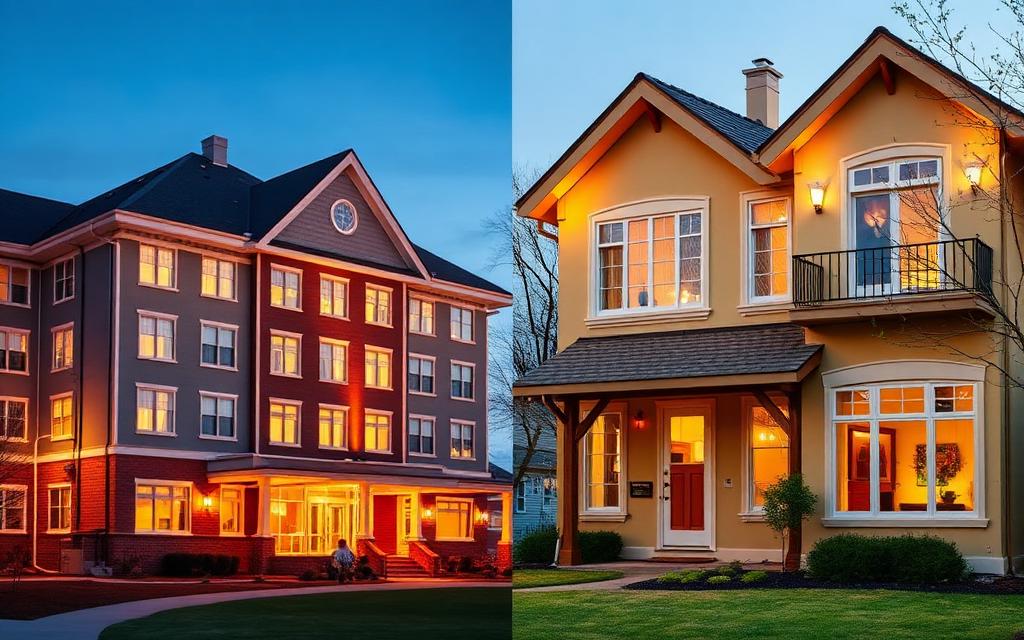
Assisted living and residential assisted living (also called care homes or boutique care homes) both provide support with daily activities — but the experience can be very different. Assisted living communities are typically larger, offering structured programming and amenities for dozens or hundreds of residents. Residential assisted living homes are smaller, serving roughly 6 to 10 residents in a home-like setting with a higher staff-to-resident ratio. This guide helps you understand the differences so you can make a confident choice.
What Is Assisted Living?
Assisted living communities are licensed residential facilities designed for older adults who need help with daily activities — such as bathing, dressing, medication management, and meals — but do not require the level of medical care provided in a skilled nursing facility.
These communities typically serve 30 to 200+ residents and offer amenities like dining rooms, activity programs, fitness centers, transportation, and common areas for socializing.
The environment tends to feel more like an apartment complex or campus, with individual units or rooms and shared common spaces.
What Is Residential Assisted Living?
Residential assisted living (sometimes called a care home, board and care, or boutique care home) is a smaller, home-based model. These homes are typically located in residential neighborhoods and serve roughly 6 to 10 residents.
The staff-to-resident ratio is usually higher, which means more individualized attention. The atmosphere is often quieter and more intimate — closer to living in someone's home than in a facility.
Many families are drawn to residential assisted living because of its warmth, personal care, and flexibility. Some boutique care homes also specialize in particular needs like memory care.
Key Differences at a Glance
Size and setting: Assisted living communities are larger, facility-style environments. Residential assisted living homes are smaller, home-like settings.
Staff-to-resident ratio: Residential homes often have a higher caregiver-to-resident ratio due to their smaller size, which can mean more attentive, personalized care.
Social environment: Larger communities may offer more structured activities and social opportunities. Smaller homes tend to foster closer relationships among residents and caregivers.
Cost structure: Costs vary widely. Residential homes can sometimes be comparable in cost to larger communities while offering more personalized care, but pricing depends on location, care level, and amenities.
Availability and discovery: Many boutique care homes don't advertise widely, which is one reason families often don't know they exist. A senior living advisor can help you discover these options.
How to Decide What's Right for Your Family
Consider your loved one's personality. Some people thrive in larger, more social environments. Others feel more comfortable in quiet, intimate settings.
Evaluate the level of care needed. Both settings can accommodate a range of care needs, but the approach to delivering that care may feel different.
Visit both types. Touring a few larger communities and a few residential homes side by side can help clarify what feels right for your family.
Ask a trusted advisor. A senior living advisor who knows both types of communities in your area can help you compare options and find the best fit based on your specific priorities.
Nurse-led senior living guidance — no cost to your family
We tour with you, ask the hard questions, and help your family compare options across Scottsdale, Phoenix, Paradise Valley, and Fountain Hills. We lean toward smaller residential assisted living (RAL) homes when they're the right fit — but we'll guide you through any setting, including larger assisted living, memory care, or independent living.
Related Resources
Written from the perspective of Mentoring Our Moments' nurse-led senior care and Residential Assisted Living consulting work. MOM supports families navigating senior living decisions and helps care home owners strengthen the systems, communication, and trust that make healthier transitions possible.