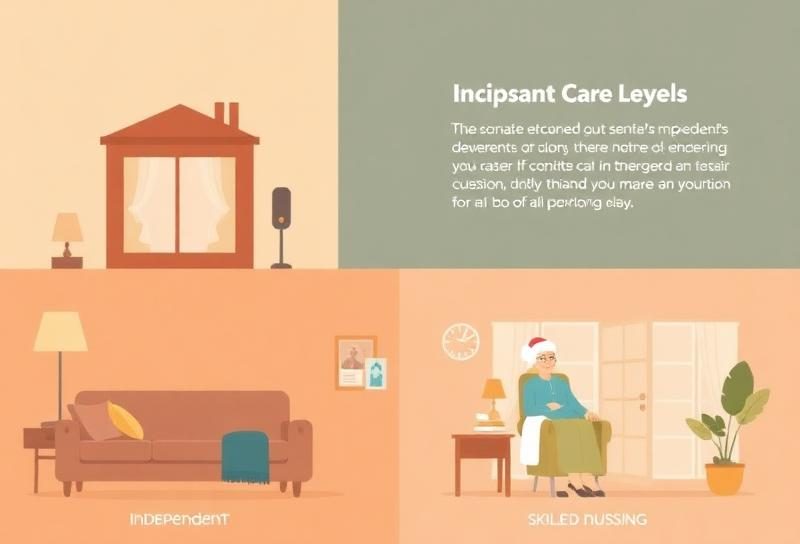
Why Understanding Care Levels Matters
Senior care is not one-size-fits-all. The right level of care depends on your loved one's current needs, anticipated future needs, and personal preferences. Understanding the spectrum helps families make informed, proactive decisions rather than reactive ones.
Independent Living
Independent living communities are designed for active older adults who want a maintenance-free lifestyle with access to social activities, dining, and community amenities. Residents live independently but benefit from the convenience and social engagement of community living.
Most independent living residents manage their own daily activities and do not require assistance with personal care, though some communities offer optional à la carte services.
Assisted Living
Assisted living provides support with activities of daily living (ADLs) such as bathing, dressing, medication management, and meal preparation. Communities range from large campuses to small residential homes.
The Administration for Community Living reports that approximately 70% of people over age 65 will need some form of long-term care during their lifetime [1].
Memory Care
Memory care is a specialized form of assisted living for individuals with Alzheimer's, dementia, or other cognitive conditions. These communities offer secure environments, specialized programming, and staff trained in dementia care.
Skilled Nursing Facilities
Skilled nursing facilities (SNFs) provide 24-hour medical care from licensed nurses and physicians. They serve individuals recovering from surgery or illness, or those with complex medical needs that cannot be met in an assisted living setting.
Hospice and Palliative Care
Hospice care focuses on comfort and quality of life for individuals with a terminal illness. Palliative care, which can begin at any stage of a serious illness, focuses on symptom management and quality of life alongside curative treatment [2].
Key Takeaways
- ✦Senior care exists on a spectrum — from independent living to skilled nursing and hospice.
- ✦The right level depends on current needs, anticipated changes, and personal preferences.
- ✦Many communities offer multiple care levels, allowing residents to transition without moving.
- ✦Starting the conversation and exploration early leads to better, less stressful decisions.
- ✦A senior living advisor can help you understand where your loved one fits on the care continuum.
Related Articles
Sources
- Administration for Community Living. 'Long-Term Care Statistics.' (2023). View source
- Center to Advance Palliative Care. 'About Palliative Care.' (2024). View source
This resource is for educational purposes only and does not constitute medical, legal, or financial advice. Always consult with qualified professionals for guidance specific to your situation.