Recognizing Burnout
Burnout is not a personal weakness — it is a systemic response to chronic workplace stress that has not been successfully managed. The World Health Organization classifies burnout as an occupational phenomenon characterized by emotional exhaustion, depersonalization, and reduced personal accomplishment [1].
A 2022 survey by the American Nurses Foundation found that approximately 60% of nurses reported feelings of burnout, with rates highest among nurses in acute care and critical care settings [2]. If you are experiencing burnout, you are not alone.
Understanding Your Experience
Burnout manifests differently for each person. Some nurses feel emotionally numb; others feel angry, resentful, or deeply fatigued. Some withdraw from colleagues and patients; others overcompensate and push harder, accelerating the cycle.
This workbook invites you to pause, reflect, and listen to what your burnout is trying to tell you. Burnout is often a messenger — pointing to misalignment between your values and your current situation.
Reflection as a Tool for Recovery
Journaling and structured reflection have been shown to support emotional processing and reduce burnout symptoms in healthcare workers [3]. The prompts in this workbook are designed to help you explore your feelings, identify patterns, and reconnect with your sense of purpose.
There are no right answers. This is a space for honesty, compassion, and curiosity about what you need to move forward.
Building a Path Forward
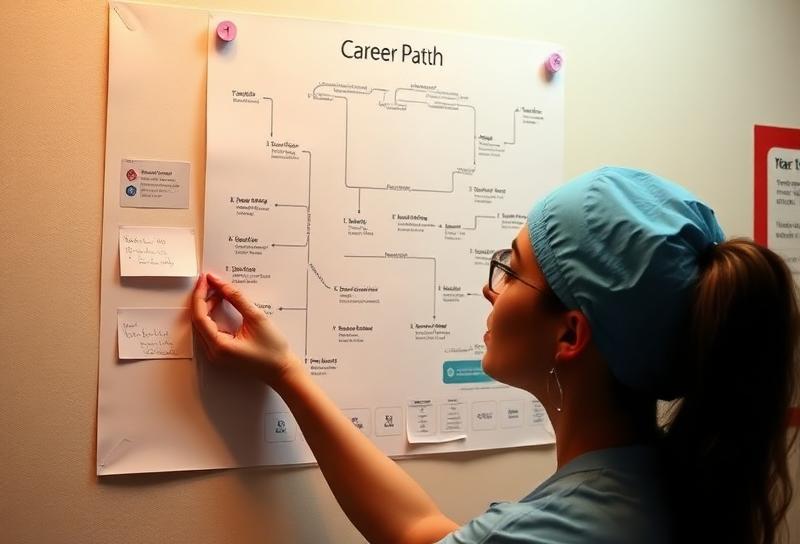
Recovery from burnout may involve changes at work (setting boundaries, changing roles, or reducing hours), changes in self-care (therapy, rest, reconnection with meaning), or career transitions.
Whatever the path looks like for you, the first step is acknowledgment. You are allowed to feel what you feel. You are allowed to want something different. And you are worthy of a career that sustains you rather than depletes you.
Reflection Prompts
Take your time with these prompts. There are no right answers — only honest ones.
When did you first notice that something had shifted in how you feel about your work?
What aspects of nursing still bring you a sense of meaning or purpose?
What are the primary sources of stress in your current role?
If you could change one thing about your work situation, what would it be?
What boundaries do you need to set — or reinforce — to protect your well-being?
What does a sustainable, fulfilling career look like for you?
Who in your life can you trust with how you're really feeling?
What would you tell a friend or colleague experiencing what you're going through?
Key Takeaways
- ✦Burnout is a systemic response to chronic stress, not a personal failing.
- ✦Approximately 60% of nurses report burnout symptoms.
- ✦Structured reflection and journaling can support emotional processing and recovery.
- ✦Burnout is often a messenger pointing to values misalignment.
- ✦Recovery may involve workplace changes, self-care, therapy, or career transitions.
Related Articles
Sources
- World Health Organization. 'Burn-out an Occupational Phenomenon: International Classification of Diseases.' (2019). View source
- American Nurses Foundation. 'Pulse on the Nation's Nurses Survey.' (2022). View source
- Ruotsalainen, J.H. et al. 'Preventing occupational stress in healthcare workers.' Cochrane Database of Systematic Reviews. (2015). View source
This resource is for educational purposes only and does not constitute medical, legal, or financial advice. Always consult with qualified professionals for guidance specific to your situation.